
2026
REasy FinanceKYC redesign for a cross-border payments app
REasy helps African SMEs pay suppliers abroad in local currency and ship goods, all in one app. I was the sole product designer, working with the founders, Compliance and two engineers for six months.
I redesigned identity verification (KYC) so users reach the product first. Verification completion rose from 21% to 69%, and payment conversion held at 71%.
Team
Sole product designer (me)
2 engineers
The problem
79% of new users never reached the product
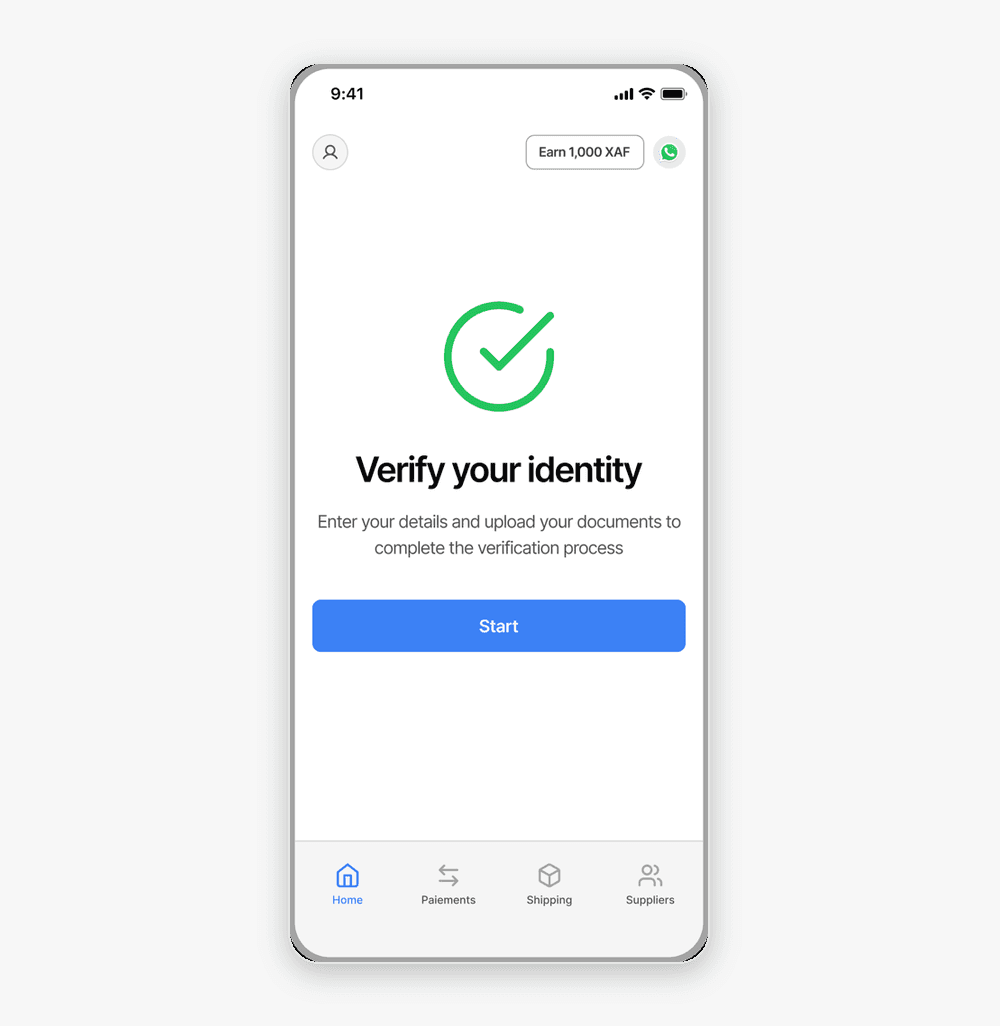
Regulation requires a full identity check (KYC) before any payment. REasy asked for it at signup, before users saw any value, and only 21% completed it.
Business impact
Paid acquisition was lost before the first payment
Funding a wallet, paying a supplier and every other revenue action sat behind the verification step.
User context
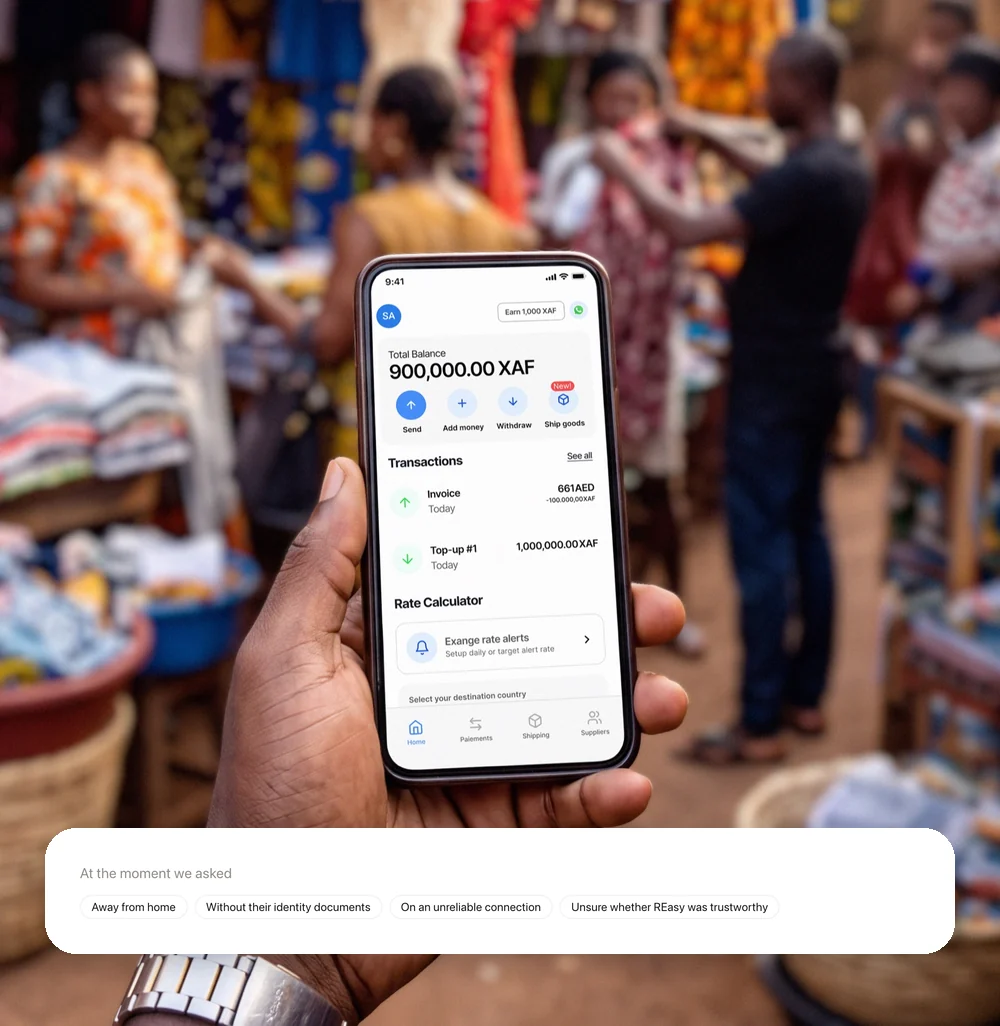
Users were asked at the worst moment
Many signed up in physical markets: away from home, without their ID, on unreliable connections, and unsure REasy was legitimate.
Solution
Progressive verification: ask for the minimum first
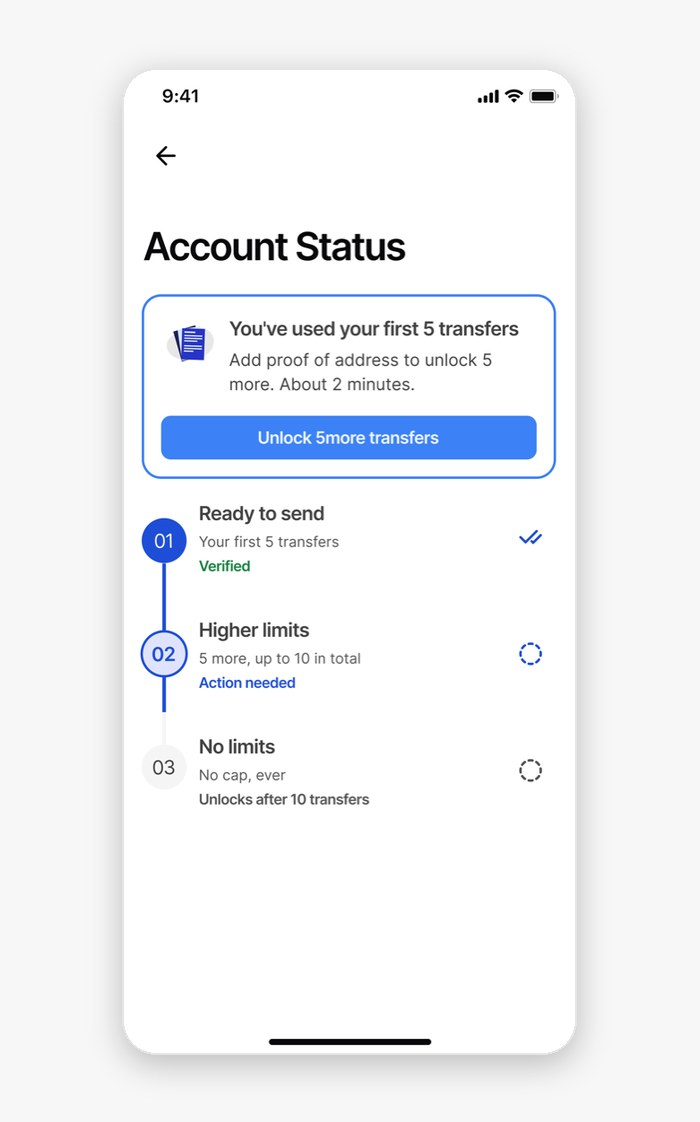
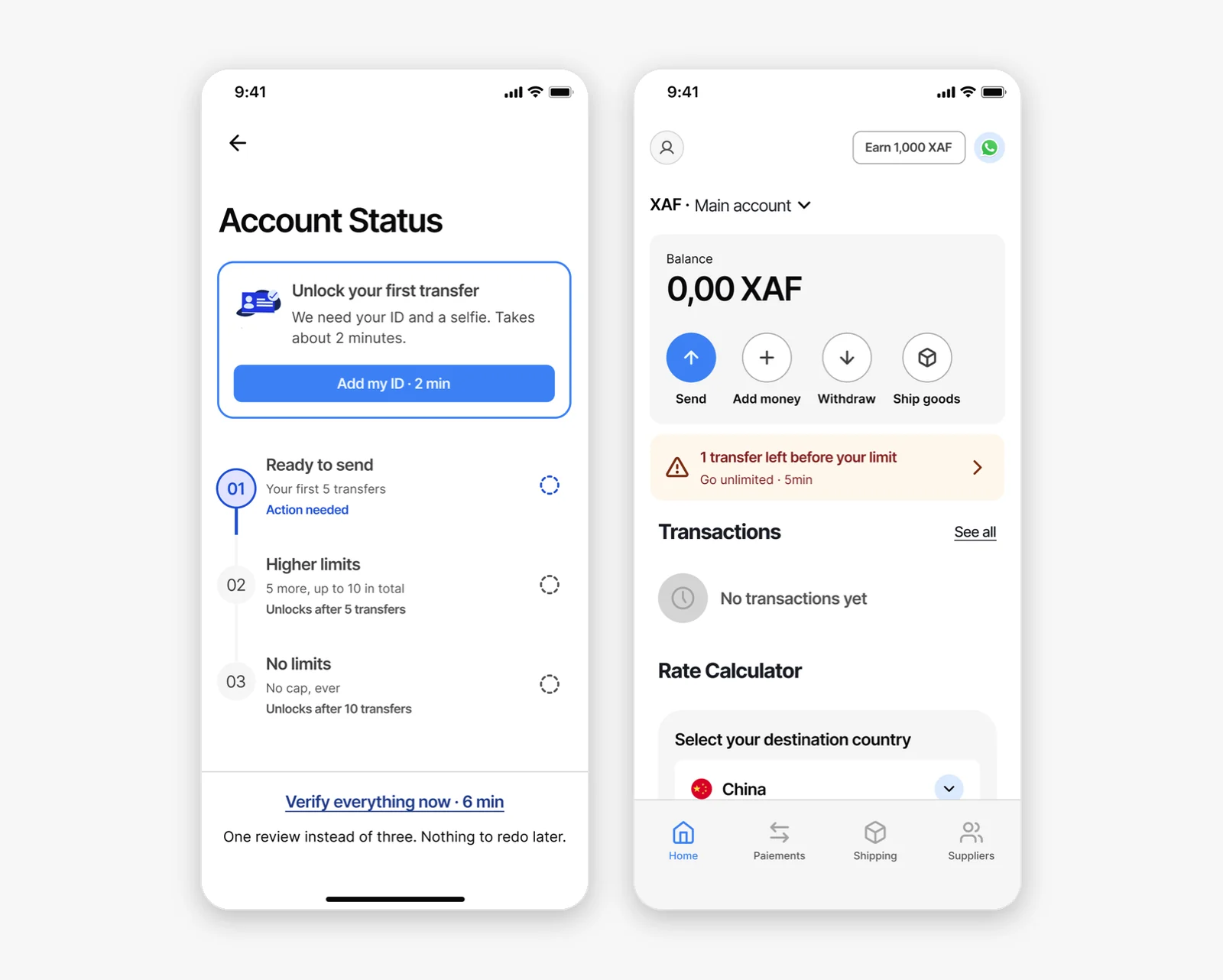
I split verification into three tiers. Tier 1 asks only for a liveness check, an ID, a name and a line of business, and unlocks payments within limits. Tiers 2 and 3 trigger with usage, up to the full regulatory check.
What each tier requires and unlocks.
Solution
Every screen shows the current tier and the next step
I made progress visible on every screen: what users have completed, what they can do now, and what's next.
Explore, check progress, get warned, verify, continue.
Design decision
Warn before a limit, never block a payment in progress
I put the warning on the home screen, one transfer before a limit. A payment that crosses a threshold still completes, and the new requirement applies to the next one.
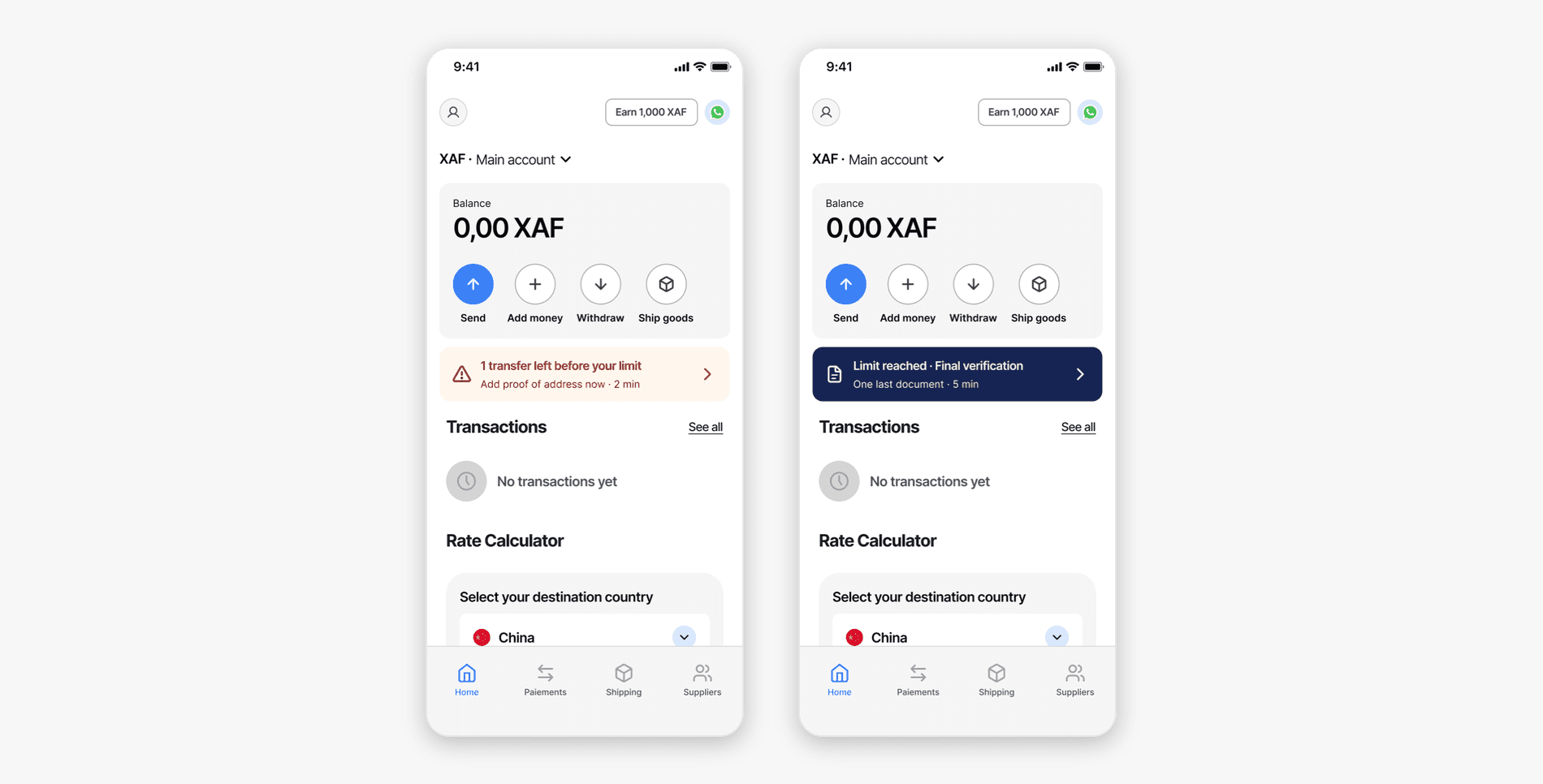
Threshold warning on the home screen, then the requirement at the limit.
Design decision
Rejection recovery built into the main flow
Worn CEMAC ID cards often fail photo checks. I wrote a specific message and one recovery action for each of the nine rejection reasons, and saved progress so users resume where they stopped.
Rejected, in review, resuming.
Research
Context
Testing the hypothesis with a low-risk experiment
The required fields were set by regulation, so the variable I could change was sequence.
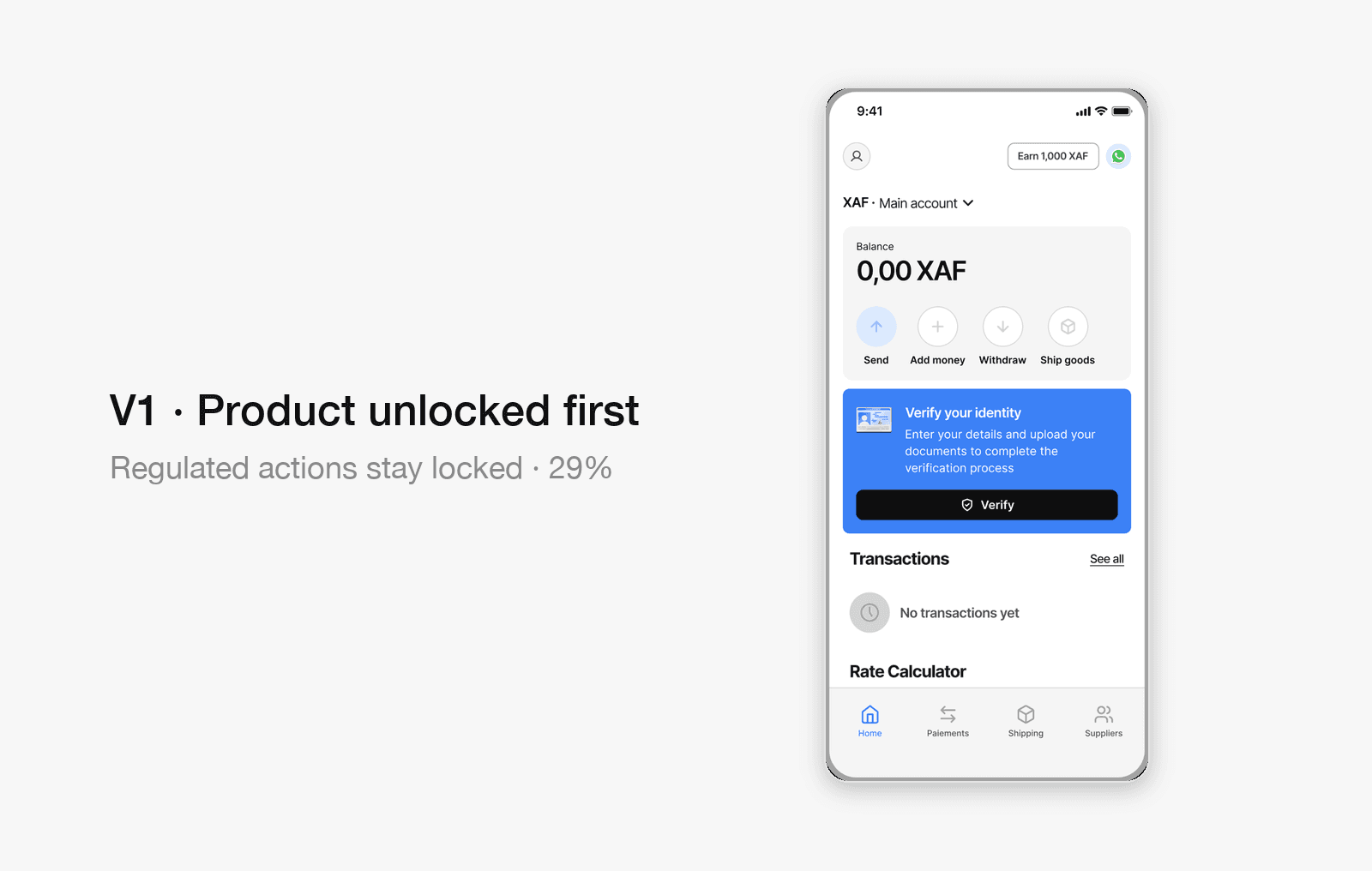
I shipped an experiment where users could explore the product before verifying, with regulated actions locked. Completion rose from 21% to 29%: sequence mattered, but seven in ten still dropped off.
Research
10 user interviews, funnel data and support tickets
I interviewed users who completed verification and users who abandoned it, then compared what they said with PostHog funnels and support conversations.
Goals:
1. Find out whether effort was the main cause of drop-off.
2. Understand what users needed before sharing ID documents.
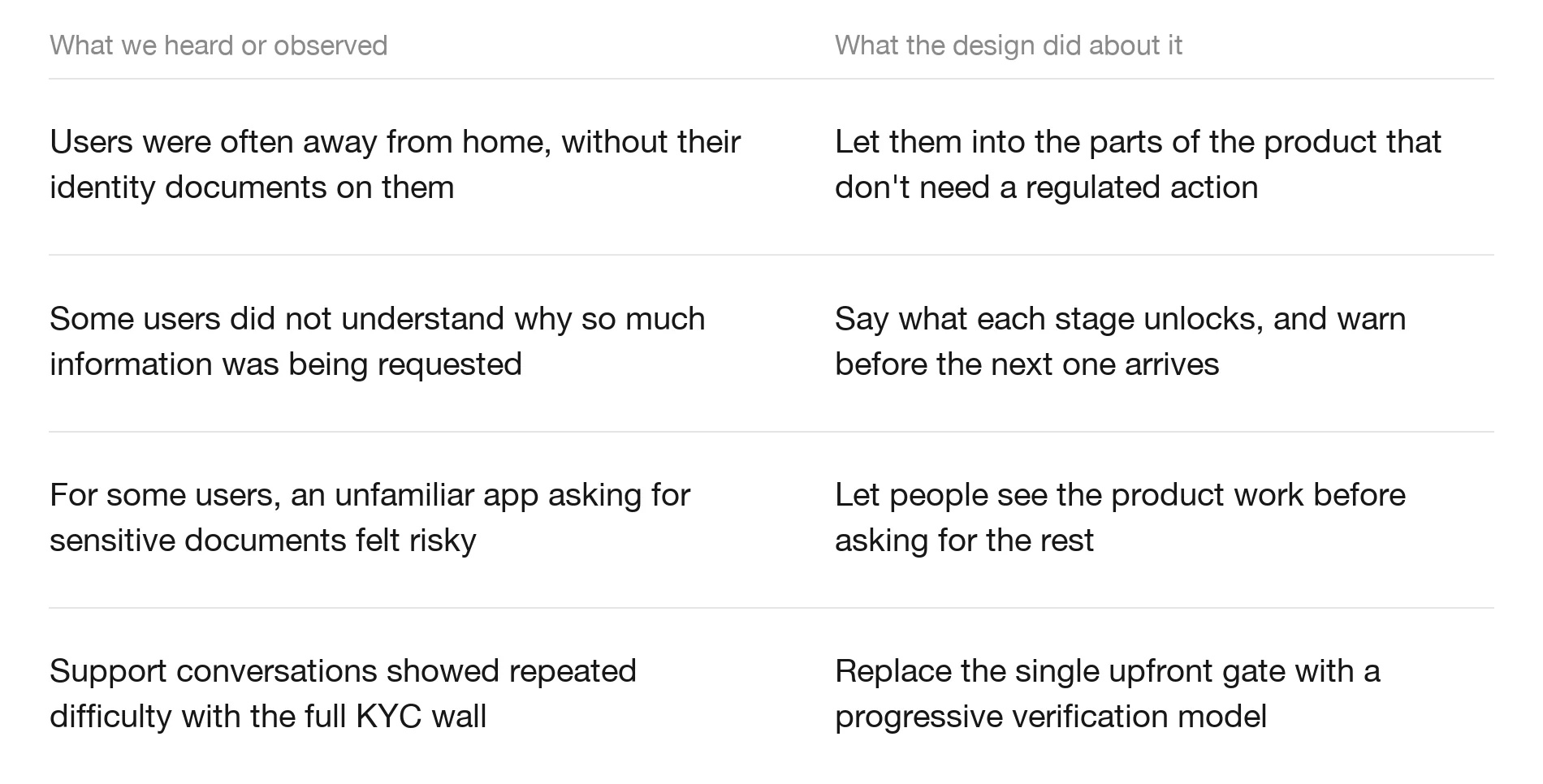
Findings, and the design response to each.



Participants
5 users who completed verification and 5 who abandoned it. In person at their workplaces, 7 interviews in French and 3 in English.
Research
Key finding: drop-off was about trust, not only effort
Users questioned why an unknown app wanted their documents, and many didn't carry them at work. Seeing the product work first gave them a reason to verify later.
Iteration
Agreeing with Compliance on what had to come first
I reframed the ask from 'reduce KYC' to 'spread it across the journey', studied the BEAC framework, and negotiated with Compliance which checks could move later and which couldn't.
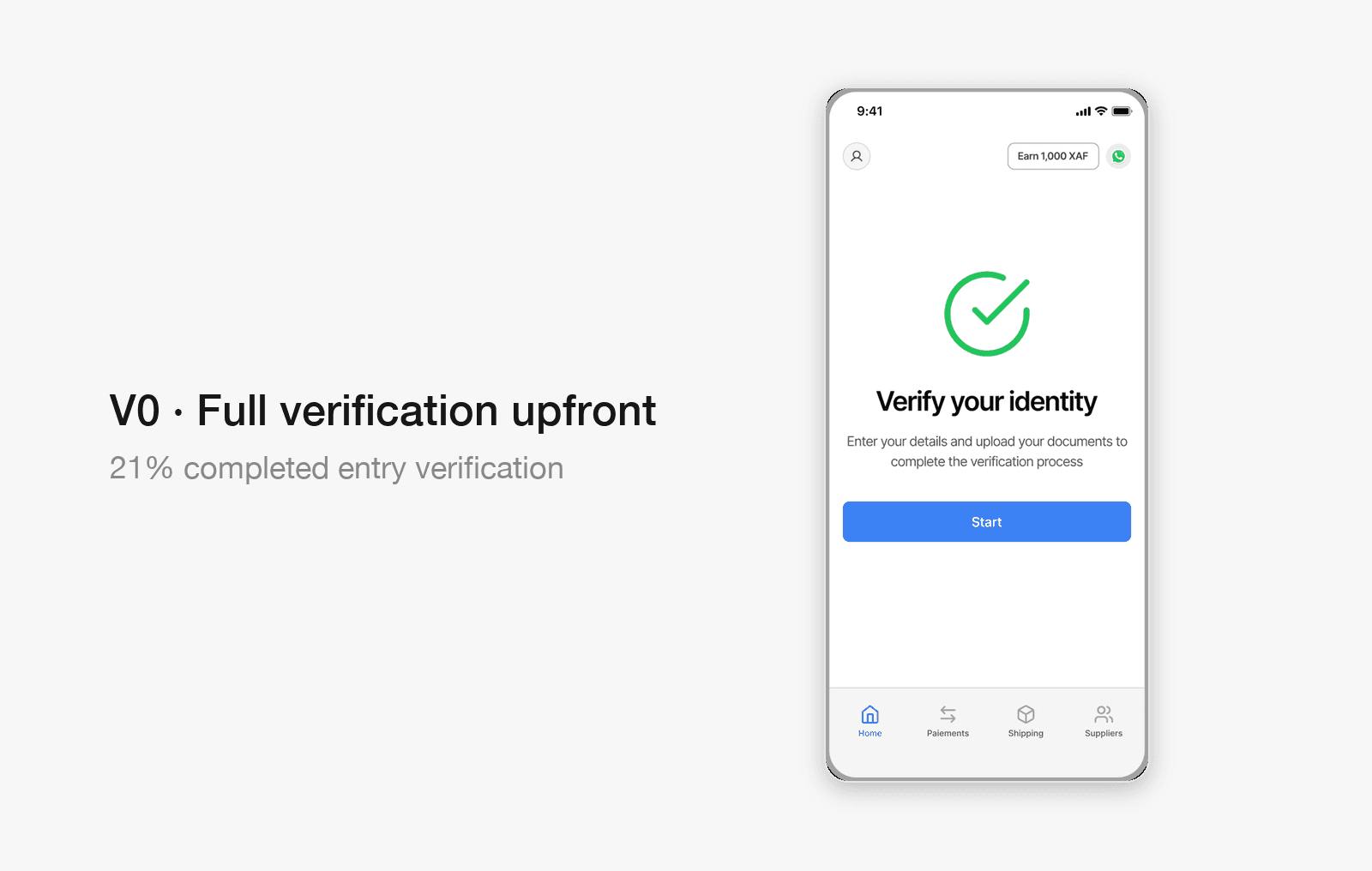
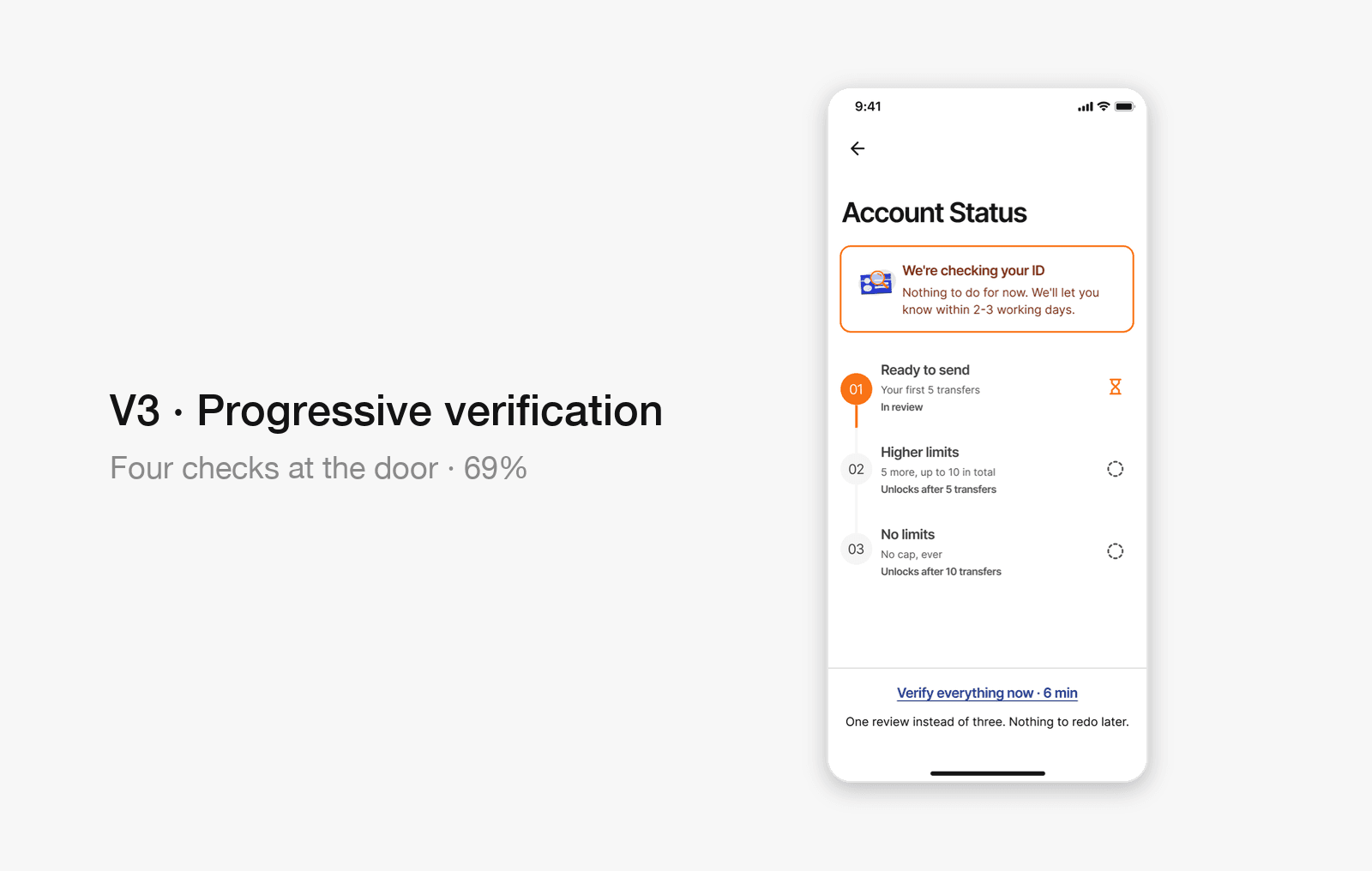
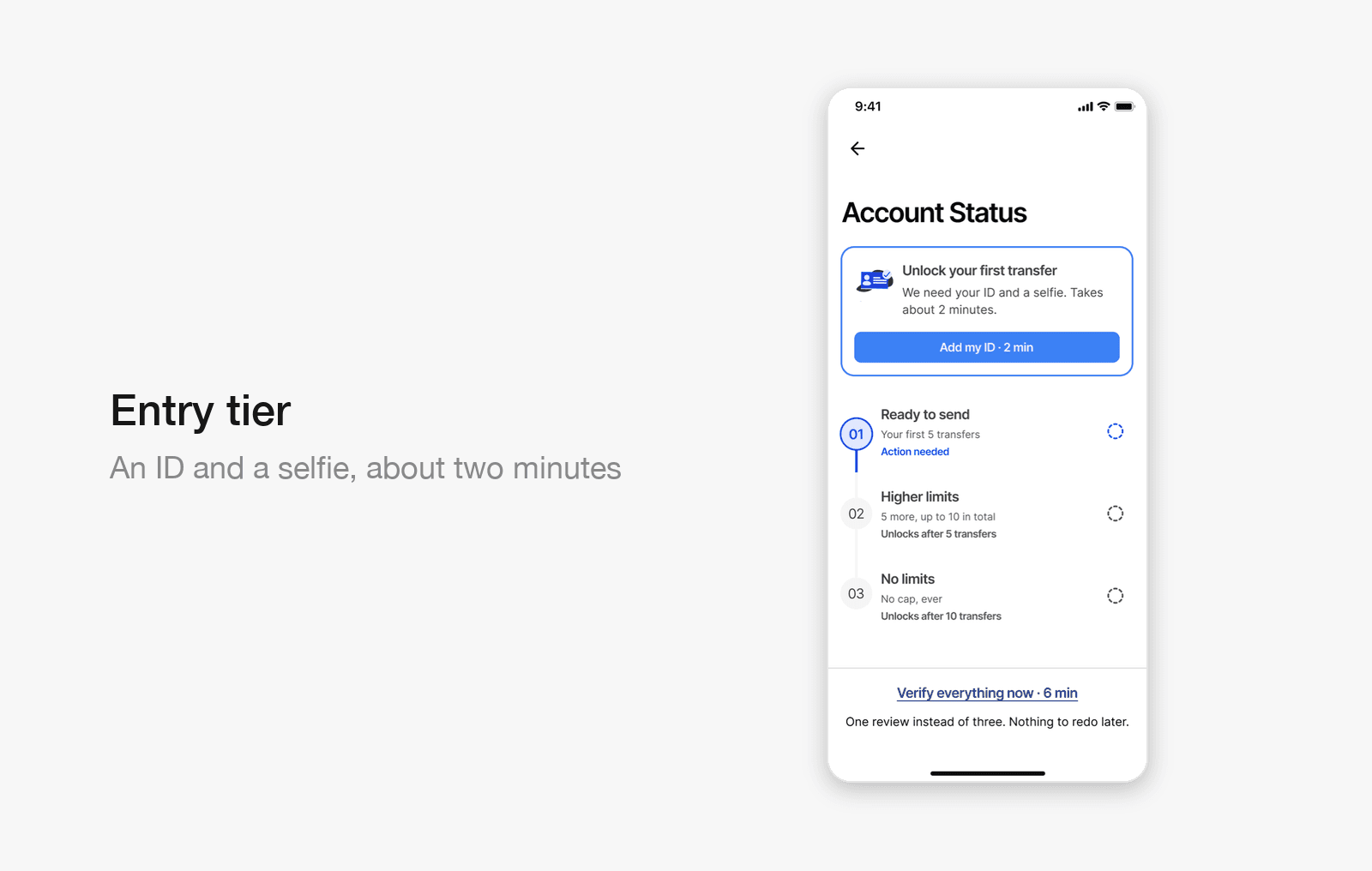

Decision: liveness and ID stay at signup
A low-value exemption didn't apply, because every REasy user is a recurring customer. Checks describing the business moved to later tiers.
Iteration
Three releases, measured in PostHog
V1 let users explore before verifying (29%). V2 split verification into two stages (39%), still too heavy. V3 cut the entry tier to the minimum compliant set (69%).
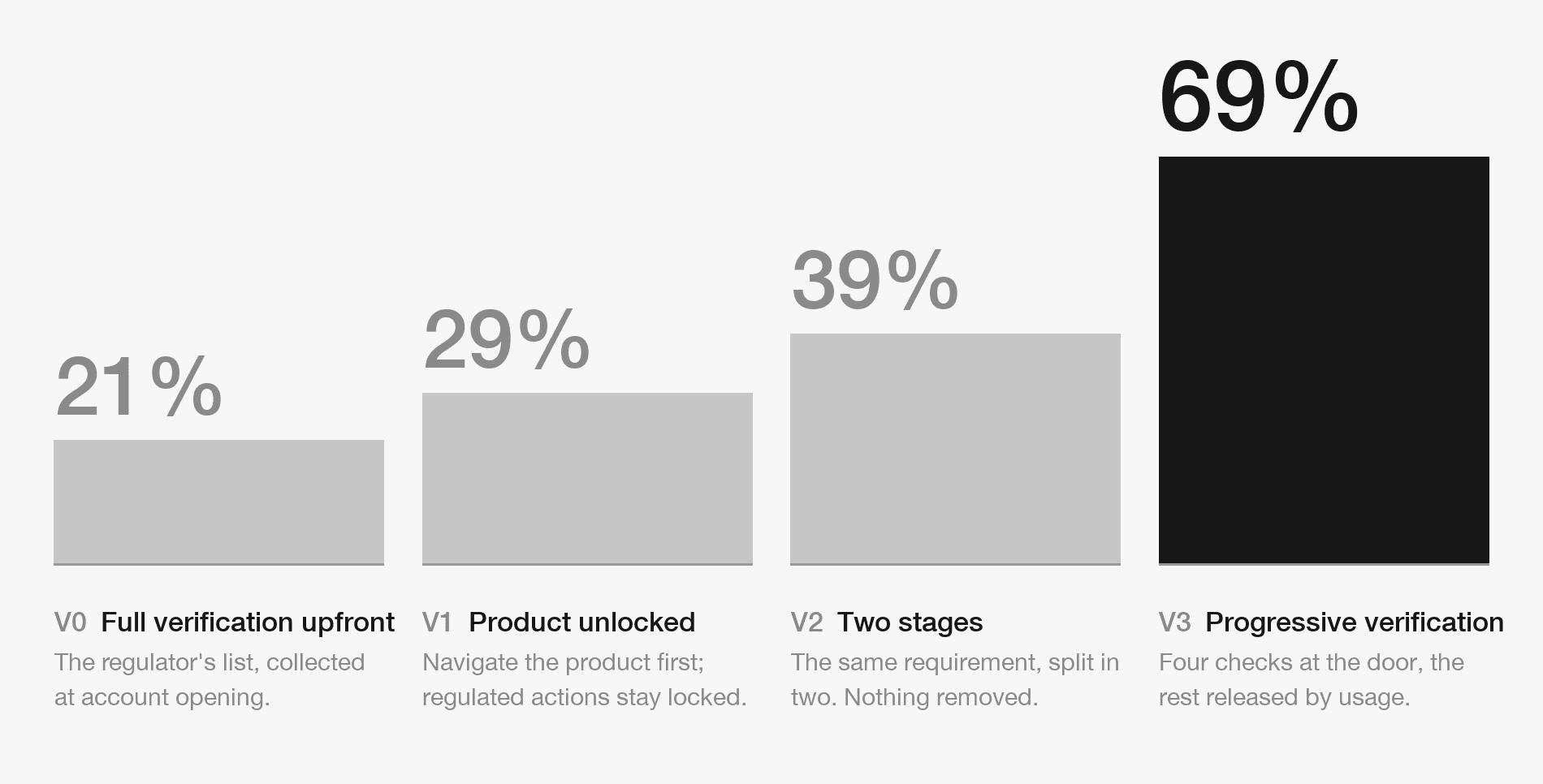
Entry verification completion by release. Source: PostHog.
Iteration
Guardrail metric: payment conversion
I tracked payment conversion to make sure more verifications didn't cost payments. It fell from 71% to 42% in the first two weeks while signups nearly doubled, then recovered to 70.9% by week four.
Invoice payment conversion before and after rollout. Source: PostHog.
Iteration
Open question: the remaining 31%
31% of new users still don't complete the entry tier, and the cause isn't confirmed yet.
Next step: segment these users and instrument the journey from signup to repeat payment before redesigning further.
Possible causes, none confirmed yet.
Results
Entry verification completion: 21% → 69%
Among users who reached the strictest tier, completion rose from 40% to 87.5%. Payment conversion held at roughly 71%.
Measured across sequential releases in PostHog, not a controlled experiment.
Results across three releases. Source: PostHog.
Key learnings
-
Sequence can matter more than form design. Changing when users were asked moved completion more than simplifying fields could have.
-
Start with the cheapest experiment. The 8-point lift from V1 gave me the evidence to open a harder conversation with Compliance.
-
Treat Compliance as a design partner. Asking which controls had to come first worked better than arguing about conversion.

Want the full process, including the state matrix and rejection copy? Reach out.Want the full process, including the state matrix and rejection copy?
Reach out to hi@saidane.pro for the full story.